
If you have decided to sell the cottage in the spring, the most useful weekend of the whole sale may be the one you were already planning: closing weekend. Before the water is shut off, the dock comes out and the outdoor furniture is stored, capture how the property looks and works. A little preparation now can save a scramble when you are ready to list.
September’s tip covered getting a property ready to list this fall. This one is for the owners who have chosen to wait. The work is different, because the property is about to spend the winter shut.
1. Photograph it before the dock and furniture come out
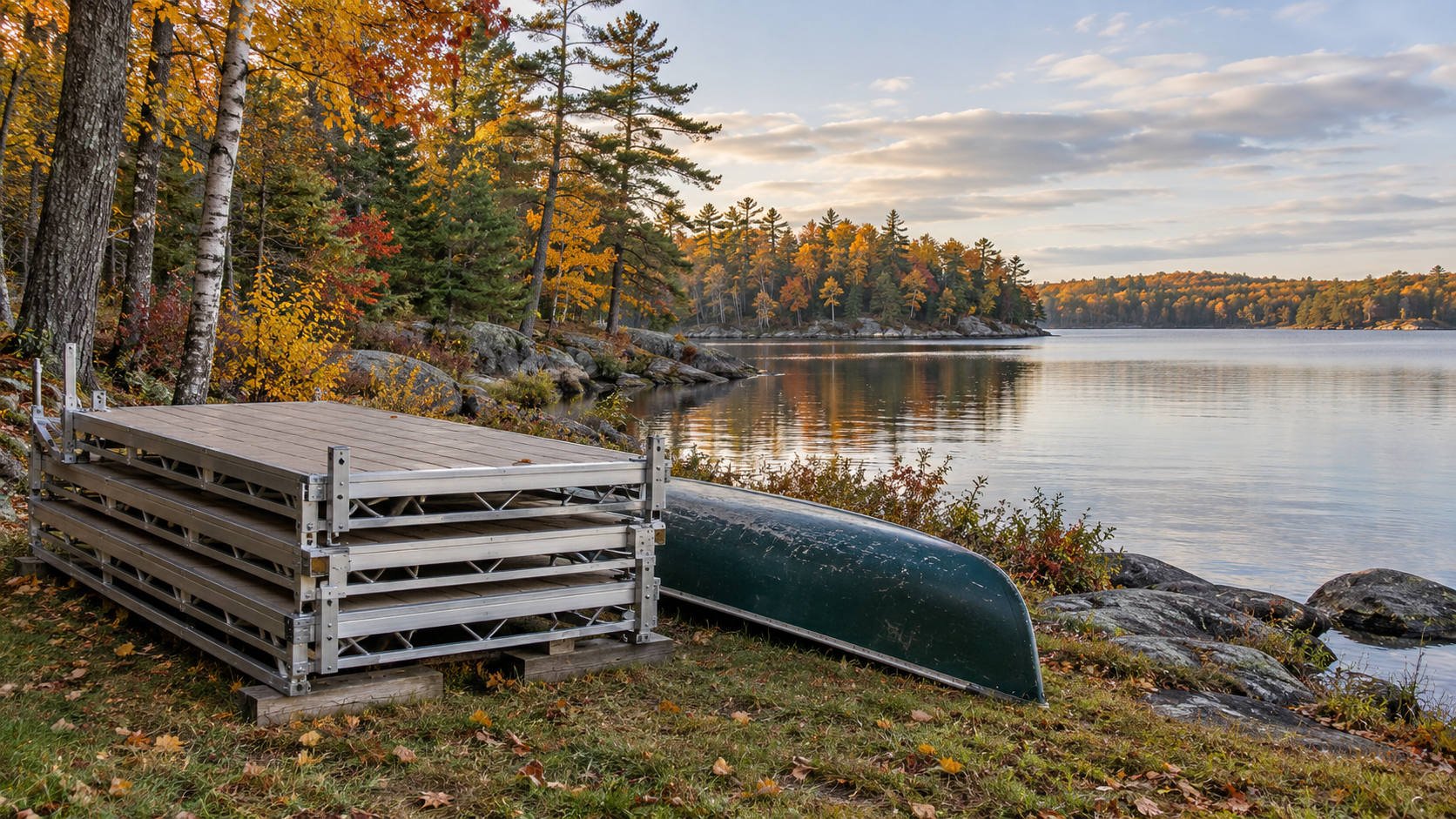
A spring listing needs current photographs, and those get taken in spring. But April on a lake can be grey water, brown lawn and a dock still sitting on the shore. Closing weekend gives you the property still set up for use: the dock in the water, the Muskoka chairs out, the view from the deck, the property seen from the water.
Shoot them now — or better, have them shot properly — and keep them for the marketing. Used honestly, clearly shown as a different season rather than passed off as the property today, they let a buyer in April see what they are buying for August. While you are at it, take the plain, unglamorous record shots too: the shoreline, the dock from underneath if you can, the septic lid, the pump, the panel. Keep these separately as reference photographs for contractors, inspections and buyer questions.
2. Write down how you close it
Every cottage has a closing routine that lives in one person’s head. Which lines get drained and blown out, what gets antifreeze, what stays on, what the heat is set to, who does it and what it costs. Write it down this year, and keep the invoice if a contractor does it.
Two reasons. A careful buyer will ask how the property has been winterized, and “my brother-in-law does it” is a weaker answer than a page and a receipt. And a spring listing may mean showings before your usual opening weekend. Decide with your agent and the person who winterizes the cottage when to reopen it, what can be inspected while it remains closed, and when the water and other systems can be demonstrated. Whoever reopens it will want your notes.
3. Decide what gets fixed, and book it now
Walk the property this fall with the eyes of someone paying for it. The soft step on the deck, the dock section that moves, the gutter that overflows, the window that will not close properly. Decide now which of those you will fix before listing and which you will leave as they are, discuss with your agent and account for in the asking price.
Then book the ones you are fixing. In spring every cottage owner on the lake has the same idea at the same time, and the trades who are free in October are not always free in April. A repair finished over the winter is one less thing between you and a listing date.
4. If the work touches the water, ask before you plan it
Docks, shoreline walls, dredging and other work at the shoreline or in the water can need approvals, and which ones depends on where you are — the municipality, the conservation authority, the Province, or Parks Canada on the Trent–Severn. On the waterway, Parks Canada requires a permit for work on, under or over the bed and waters of its lakes and rivers; its in-water and shoreline works permit page is the place to start. None of these approvals move on your listing timeline. If shoreline work is on the list, find out what it needs before you commit to finishing it by spring, and do not start it without the paper.
5. Start the paperwork while nothing is riding on it
Septic records, water information, permits, any survey, the replacement dates on the big systems, every rental contract on the property. The full list is in September’s tip, and the argument for starting now is the same: some of it takes an afternoon, and some of it runs on someone else’s clock. Winter is a good time to wait on a municipal file request.
If you are planning a sale, speak with your accountant this fall about the tax implications and any principal-residence designation decisions — not the month after it closes. We went through why in the tax side of selling a cottage.
6. Sort out winter and spring access
Some buyers will want to see the property before the snow is gone. If the road is private or seasonal, know now whether anyone plows it, to where, and what it would take to get a buyer in during February. On a water-access property, know the parking arrangement and when safe access is available between freeze-up and ice-out, and when showings may need to wait.
Spring has its own access quirks: soft roads, and on many rural roads, seasonal load restrictions that can affect when heavy trucks — a septic pumper, a well contractor — can get in. Check with your township before you schedule spring work that depends on one.
7. Call your insurance broker before you walk away for the winter
Before closing, ask your insurance broker what your cottage policy requires while the property is shut for winter. Confirm any inspection, heating, water shut-off or draining requirements, arrange what is needed, and keep a record. If you plan to reopen early for showings, ask whether that changes anything. A claim that goes wrong over the winter is a bad way to start a spring sale.
Bill’s Insider Take
A spring sale does not start in April. It starts the weekend you pull the dock. The owners who treat closing weekend as the first day of the sale — photographs taken, routine written down, trades booked, papers requested — have fewer loose ends when it is time to choose a listing date.
If you are weighing a spring sale and want to talk through timing, what is worth fixing and what the property is likely to be up against on your lake, call me at 705-242-5764 or email bill@lakecountryrealestateteam.com this fall. It is easier to plan those decisions in October than in March.
Bill Jackson · Sales Representative · Lake Country Real Estate Team · eXp Realty, Brokerage
Lake Country Real Estate Team | eXp Realty, Brokerage | Serving Simcoe County, Muskoka, Parry Sound, Kawartha Lakes & Haliburton