Ice can damage a Lake Simcoe shoreline in two different ways. Wind and current can push broken ice ashore into docks, decks and boathouses, and temperature swings can make a solid sheet expand and shove against the bank. Some winters do little and others do a lot, which is why a shoreline you've only seen in summer can't tell you its history.
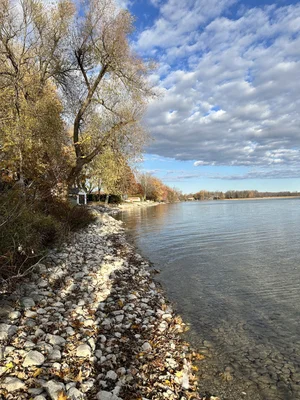
Why talk about ice now? Because now is the easiest time to look. If you've just bought on the water, or you're shopping for waterfront currently or through the winter, the dock is out and the shoreline is bare. You can see what sits in the ice's path before the lake freezes, and you'll know what to check when the spring thaw comes.
Moving ice
When wind and current push broken ice, the force on a structure is very different from the force of ice that is frozen in place. The City of Barrie's marina study draws exactly that line, and says floating structures generally shouldn't be exposed to moving ice. (City of Barrie, Marina Strategic Plan, Appendix A, section 3.4)
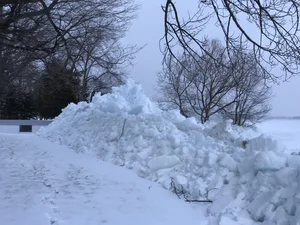
On Lake Simcoe, powerful wind on Wednesday, April 4, 2018 drove blocks of ice the size of small cars into the Brechin shoreline, according to CTV Barrie. The report described crushed boats, toppled trees and damaged docks, and some residents said the ice damage on that side of the lake hadn't been this bad in decades. (CTV Barrie, April 5, 2018) I photographed ice shoved ashore on our own stretch of shore that same day.
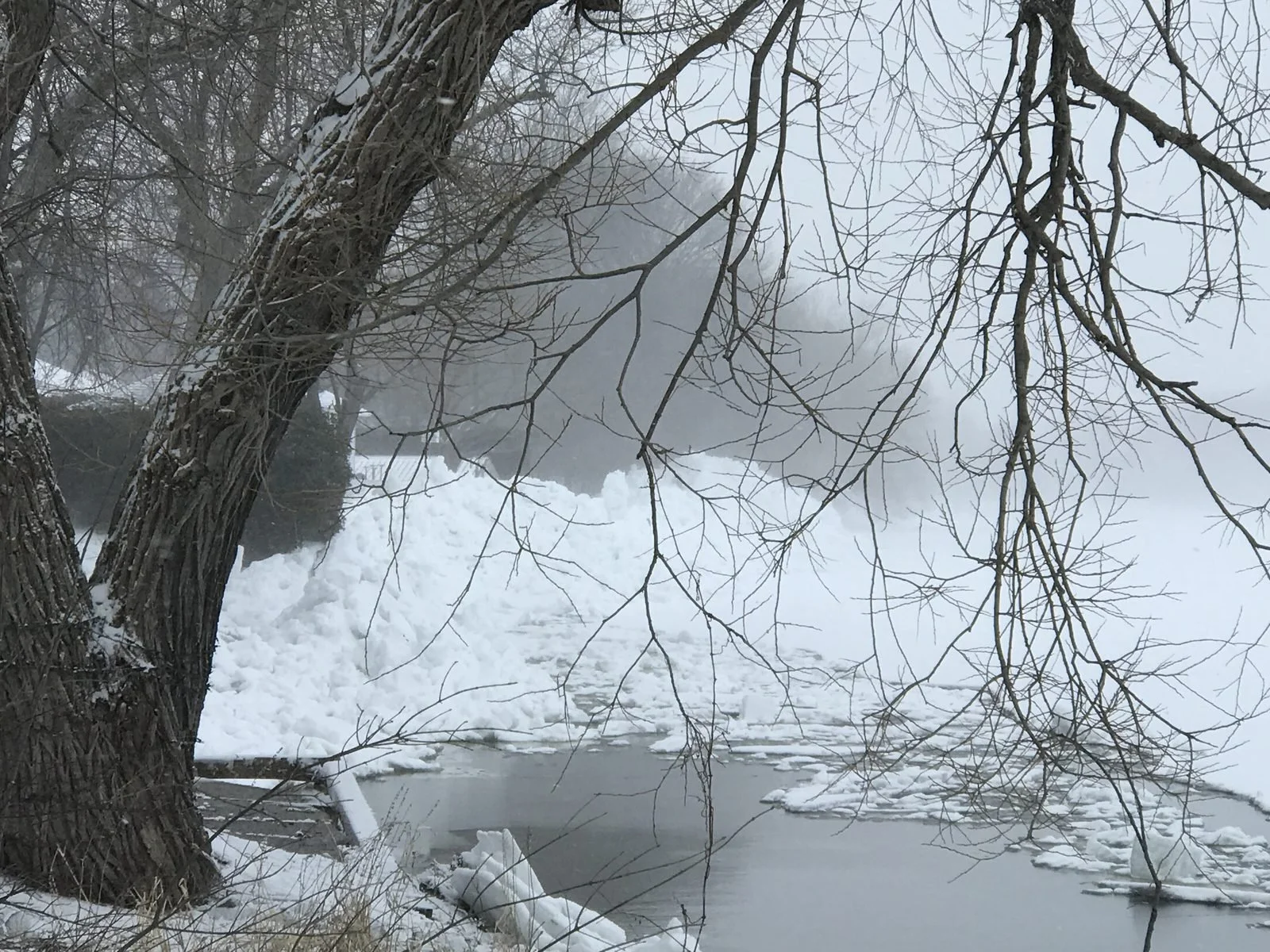
Ice shoved ashore along our shoreline, 4 April 2018.
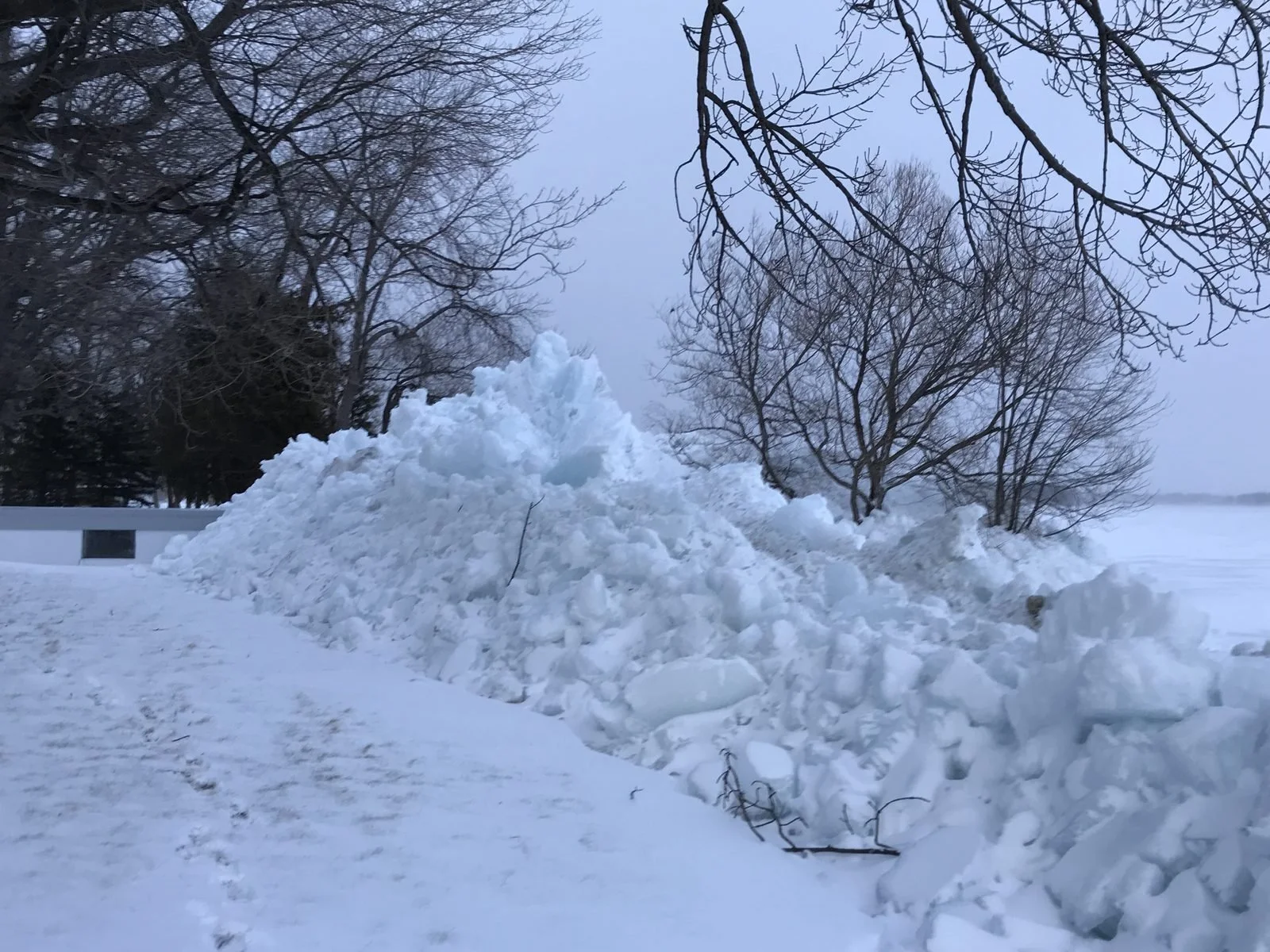
The same day, 4 April 2018: a boathouse buried under ice. It came through the thaw in good repair, and it's still standing today.
How temperature changes push ice
A solid sheet can push on its own, too. The Lake Simcoe Stewardship Guide, a property-owner guide from the University of Guelph and the Ontario Ministry of Natural Resources, explains that cracks form in the ice sheet, water rises into them and freezes, and the sheet expands, with warmer air expanding it further. Repeated cycles push soil and rock inland into mounds called ice ridges, and the guide says the process can damage retaining walls, docks and boathouses. (Lake Simcoe Stewardship Guide, Factsheet: Ice Ridges, p. 142)
If you own on the water
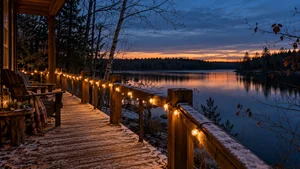
- Look at what sits in the ice's path. Docks left in, a boathouse, a shore wall, anything on the bank. The Lake Simcoe Stewardship Guide gives the same advice: store personal property for winter, and keep it out of the natural path of the ice. For the marina it assessed, Barrie's study describes floating breakwaters being removed or moved to shelter for winter, with the docks behind them removed too. A local dock company takes my dock out every fall. For years it sat up on shore; since a fallen limb damaged it in the 2025 ice storm, I've had it stored under my deck for extra shelter, in autumn 2025 and again in autumn 2026. That's what suits my lot, not a rule for everyone.
- Ask your insurance broker one specific question: is ice damage to your dock or boathouse covered, and under what conditions? I can't tell you the answer, because it depends on your policy.
- Document changes when conditions are safe. If ice has pushed material up the bank, photograph it from a safe spot before you change anything. Stay well back from the water's edge and from banks that may be unstable. (Township of Ramara, April 10, 2026 notice warns about both.)
- Check before you grade or move material. The Lake Simcoe Region Conservation Authority lists site grading and placing or removing material as activities that need permission in a regulated area. Check your lot against their regulation mapping or call them first. (LSRCA: Do I need a permit?)
- Stay off the ice. The same Ramara notice says it plainly: "No ice is safe ice."
If you're buying
If you're buying this winter, the shoreline will be under ice and snow, so you can't judge it the way you would in July. When you view a property, ask the owner about ice: has it damaged the dock, deck, boathouse or shore wall, what was repaired, and when? Look at how the shore structures are built and how they have aged. Then see the shoreline again in spring if you can. It's the same discipline as our piece on Lake Simcoe water levels: look at the lake in more than one season.
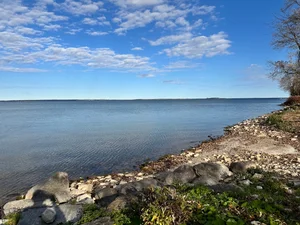
Spring 2026 was a quiet one for ice where I am. The lake ran high, but along my stretch the ice pushed up a little on shore and did no damage at all. That's why it's worth asking about a shoreline's history: a quiet year doesn't establish what earlier winters did.
If you'd like me to walk a particular shoreline with you, ask.