
Selling a cottage isn't like selling a house in town. A house sells on the strength of the home itself — the kitchen, the layout, the neighbourhood. A cottage sells on something harder to bottle: a feeling. Morning coffee on the dock. The kids in the water. The quiet. And that feeling has a season.
Get the timing right and your cottage nearly sells itself, because buyers are seeing it exactly as they imagine owning it. Get it wrong and you're asking someone to fall in love with a grey shoreline and bare trees. After years of selling waterfront across Muskoka, the Kawarthas, Haliburton, Parry Sound and Simcoe County — and living on the lake myself — here's how I think about timing a cottage sale.
The cottage market runs on its own calendar
Most cottage buyers do their dreaming in summer. They're up at a friend's place, or renting for a week, and somewhere between the second swim and the sunset they decide this is the year. That emotional window — roughly May through August — is when buyer demand for waterfront peaks.
Here's the catch: by the time a buyer is ready to act, you want your cottage already in front of them, looking its absolute best. Which means the work starts before the season does.
Why spring is usually the sweet spot
For most cottages, listing in late spring — roughly April through June — is the strongest play:
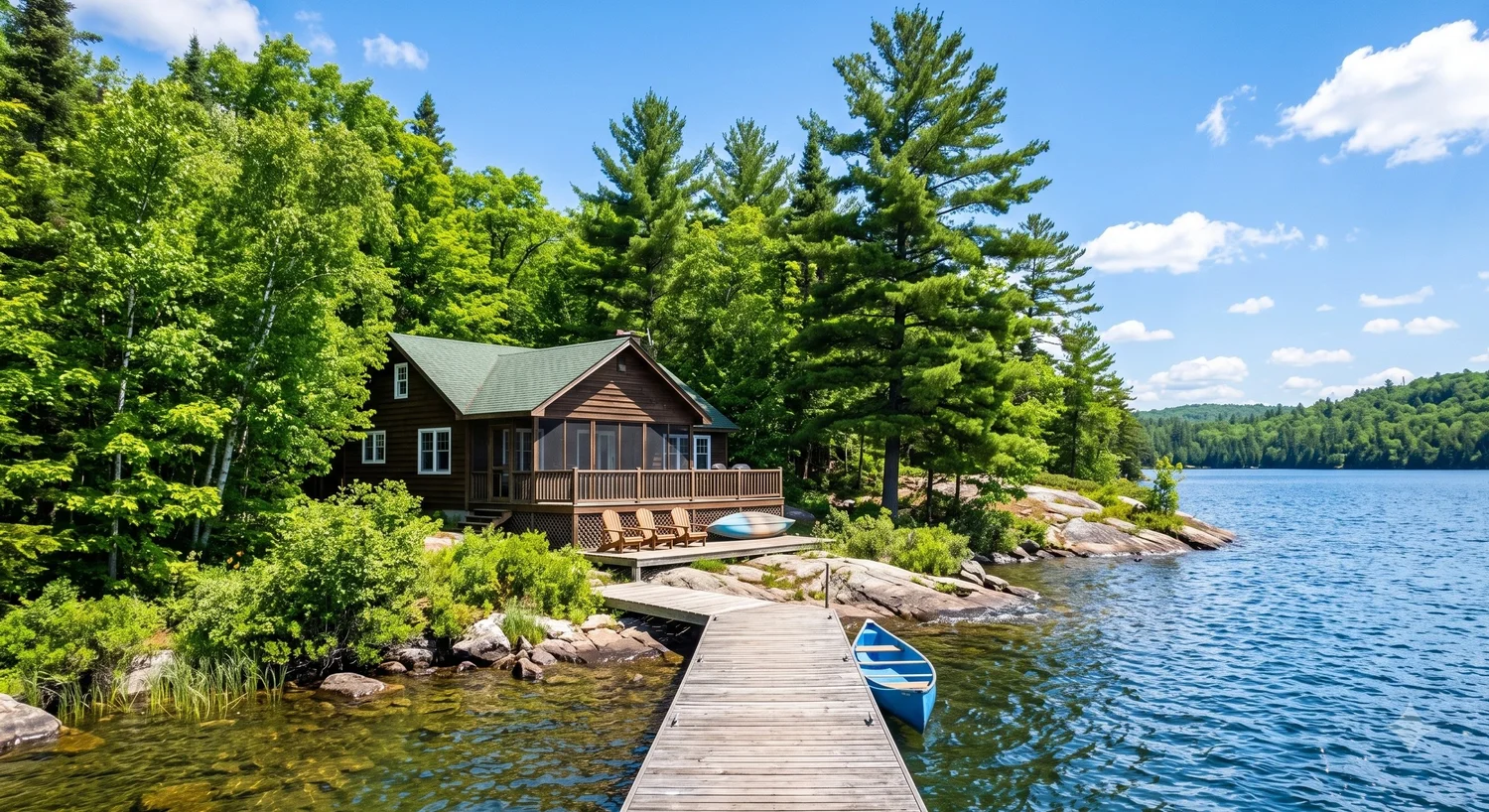
- The water's up, the dock's in, the trees are leafing out. The property photographs the way buyers fantasize about it.
- You catch the front edge of summer demand, when motivated buyers are actively looking — and competing.
- You leave runway for a summer close, so a buyer can actually use the cottage the season they buy it. That's a powerful motivator.
A waterfront property shot in June — green and alive, the water sparkling — tells a story. The same property shot in late November, leaves down, water low and grey, dock pulled, tells a very different one. Same shoreline. Completely different sale.
The mistake that quietly costs sellers
The most common timing error I see is completely understandable: "Let's have one more summer, then we'll sell in the fall."
It feels right. But it means listing at the precise moment buyer interest drops and the property stops showing well. You've spent the best-looking months of the year using the cottage instead of marketing it — then put it on the market when it looks its worst. That combination tends to mean longer days on market and softer offers.
If you know in your heart this is the year, the better move is usually to list in spring and enjoy the sale process while the cottage is at its most appealing — not squeeze in a final summer and sell into the downslope.
When off-season selling actually makes sense
Spring is the rule of thumb, not an iron law. There are real reasons to sell in the shoulder seasons or even winter:
- Less competition. Far fewer cottages are listed off-season, so a well-presented property stands out instead of getting lost in the spring rush.
- Serious buyers only. Nobody tours a cottage in February for fun. Off-season buyers are motivated and ready to move.
- Four-season properties. If your cottage is a true winterized, year-round home with good road access, winter showcases exactly that — a fireplace, snow on the trees, skiing or snowmobiling nearby. You're selling a different dream, and it's a real one.
The point isn't that spring is the only time to sell. It's that every season tells a story — and you want to be the one choosing which story your cottage tells.
Read the market, not just the calendar
Season is the part you can see. The other half is the market underneath it: where interest rates sit, how much inventory is on your specific lake, what comparable waterfront has actually been selling for. Those conditions shift the calculus in either direction — and they vary enormously from one body of water to the next. Lake of Bays behaves differently than Kawartha Lakes, which behaves differently again than a small Haliburton lake.
That's where a conversation with someone who watches your particular market closely is worth more than any general rule. "Spring is best" is a fine starting point — but the right time to sell your cottage depends on your lake, your property, and what's happening right now.
Being ready matters as much as being on time
One last thing, because most sellers underestimate it: the best listing date in the world won't help if the cottage isn't ready to be seen. Getting a waterfront property market-ready — the dock, the systems, the shoreline, the details buyers actually scrutinize — takes more lead time than people expect. Part 3 covers exactly what cottage buyers inspect, and what sellers waste money on.
For now, the takeaway is simple: the best time to sell a cottage in Ontario is usually spring — and the planning starts the season before. If you're thinking about selling next year, the smartest move you can make this year is a conversation.
📖 This is part of our complete guide: How to Sell Your Cottage in Ontario — 2026.
Thinking about selling your cottage in Muskoka, the Kawarthas, Haliburton, Parry Sound or Simcoe County? I live on the lake, I sell on the lake, and I'd be glad to walk you through what your specific property and market look like right now — no pressure, just a straight conversation.
Bill Jackson | Sales Representative
EXP Realty Brokerage | EXP Luxury | CLHMS | GUILD™
📞 (705) 242-5764
📅 Book a free 15-minute consultation
🌐 lakecountryrealestateteam.com
More in the series — Part 2: What Your Cottage Is Actually Worth, the waterfront factors that drive value, and Part 3: Getting Your Cottage Ready to Sell, the season of work that happens before the sign goes up.