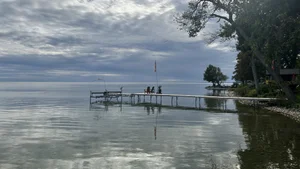
It’s a Friday evening in July. You’re standing on a dock you don’t own yet, the lake has gone to glass, a loon calls from somewhere across the bay, and the agent beside you has gone quiet — because they know they don’t need to say a word. This is the moment cottage country sells itself. It’s also the exact moment you’re most likely to make a six-figure decision with the part of your brain that’s on vacation.
I’ve watched it happen every summer for years. Peak season is when the lakes look their absolute best, when families are already up here living the dream for a week, and when the fantasy of owning a piece of it feels close enough to touch. That feeling is real, and it’s a big part of why people buy here. But it’s also the thing that talks buyers straight past the questions they’d never skip on a house back in town.
Here’s the good news: you can absolutely buy well in the middle of summer. You just have to let yourself feel it and still do the work. The two aren’t enemies.
Why summer makes smart people impulsive
In the spring, buyers tour cottages in their heads. In July, they tour them with their whole bodies — bare feet on warm dock boards, kids already in the water, a cold drink sweating on the railing. Every sense is making the case. And when you’re feeling that much, the boring stuff — the septic, the shoreline, the winter road — quietly gets filed under “we’ll figure it out.”
The market knows this too. Summer brings the widest inventory of the year, which is great, but it also brings the most competition and the most emotion in the room. Well-priced waterfront moves fast in July, and multiple offers are common on the properties everyone can picture themselves in. That combination — high emotion, real competition — is precisely where buyers overpay or waive the things they shouldn’t.
How to keep your head (without killing the romance)
The disciplined summer buyer isn’t the one who feels nothing. It’s the one who feels everything and still runs the list. A few habits separate the people who love their cottage five years later from the ones who don’t:
Go back a second time, at a different hour. The bay that’s glass at 7 p.m. can be a wind tunnel at 2 p.m. Morning sun and evening sun land on completely different shorelines. If you’ve only ever seen a place at its best hour, you’ve only seen half of it.
Check what you can’t undo. Paint, docks, and kitchens are fixable. Water depth off the dock, exposure to the prevailing wind, the shore road allowance, septic capacity, and winter access are not. Fall in love with the things you can’t change — not the staging.
Know your number before you’re on the dock. Decide what a place is worth to you at the kitchen table, in daylight, before the loon starts up. Then hold it. A view is worth a premium; it is not worth every premium.

The view that sells cottage country — and the reason it pays to keep one hand on the checklist.
Bill’s Insider Take
I’ve talked people out of the “perfect” cottage more than once — the one with the sunset that stopped them mid-sentence, where the water off the dock turned out to be two feet deep, or the shoreline was road allowance they’d never actually own. Every one of them thanked me later. My job on a summer showing isn’t to feel less than you do about a place — it’s to be the person in the room still asking the boring questions while you’re busy falling in love. Feel all of it. Then let’s go check the septic together.
The other side of the dock: why July is a strong time to sell
If you’re on the selling side of this, the same emotion works in your favour. Summer is when your buyers are physically here, already in the mindset, already imagining their own kids off the end of your dock. A waterfront property shows at its absolute best in July, and the pool of motivated, emotionally-ready buyers is as deep as it gets all year.
The mistake sellers make is assuming summer means they can name any number. It doesn’t. The buyers up here in July are often the most educated ones — they’ve been watching all spring and they know value when they see it. Correct pricing plus peak-season emotion is the combination that generates the fast, clean, over-asking sales. Overpricing into that same market just makes you the listing everyone scrolls past on the way to the one that’s priced honestly.
The bottom line
Summer is the most emotional season to buy in cottage country, and that’s not a warning — it’s just the truth of the place. The lakes are supposed to make you feel something. The buyers who do well are the ones who let the feeling in and keep one hand on the checklist. If you’re thinking about making a move this summer across any of the five regions I serve — Simcoe County, Muskoka, Parry Sound, Kawartha Lakes, or Haliburton — I’d be glad to be the steady voice on the dock. Reach out any time.
Lake Country Real Estate Team | eXp Realty | Serving Simcoe County, Muskoka, Parry Sound, Kawartha Lakes & Haliburton